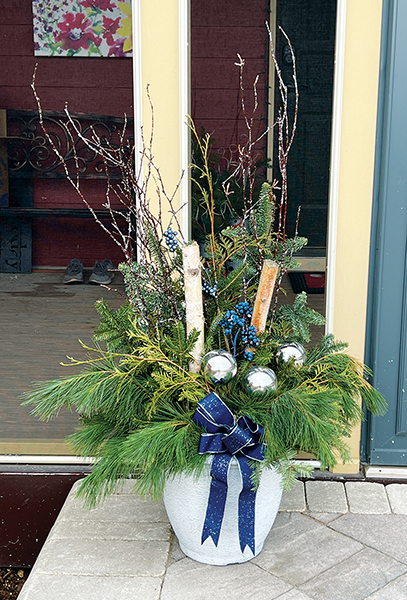
Dress up front steps, window boxes or patios with containers filled with greenery, berries, cones, baubles and more. All the ingredients needed can be found at the local garden center, craft store and in our own backyard.
Start with a walk through the yard and gardens. Look for evergreens that could tolerate a bit of pruning; perennials with interesting seedheads and pods; and colorful branches, fruits and berries to include in winter containers. Plants enjoyed in the winter garden are good candidates.
Many native plants make excellent additions to winter containers. Include berry-laden stems of plants like winterberry (Ilex verticillata); dried flowers of smooth hydrangea (Hydrangea arborescens); colorful stems of red twig dogwood (Cornus sericea); branches of paper bark birches; and fruit from native crabapples, hawthorns and roses.
Harvest a few seedheads and pods from gardens and native plantings. Collect a few stems of black-eyed Susans (Rudbeckias), coneflowers (Echinacea), wild quinine (Parthenium integrifolium), anise hyssop (Agastache foeniculum), goldenrod (Solidago), milkweed and other plants that are growing in the landscape. Include some airy texture and motion with native grasses like little bluestem (Schizachyrium scoparium), big bluestem (Andropogon gerardii), switchgrass (Panicum virgatum), prairie dropseed (Sporobolus heterolepis), Indiangrass (Sorghastrum nutans), sideoats grama (Bouteloua curtipendula) and others.
Don’t overlook other items in the garden. Evergreen cones and pods from many cultivated plants, such as Siberian iris, daylilies, alliums and balloon plant (Gomphocarpus physocarpus), are attractive in containers as well as our winter garden. Leave them natural or add some paint and glitter for a bit of bling.
Leave out invasive plants like phragmites, teasel and oriental bittersweet. These will drop seeds and soon become a problem in the landscape and surrounding natural areas.
Gardeners can convert one or two of their summer or fall containers into a winter display or start with an empty planter. Make sure the container selected can tolerate winter weather. Concrete, iron, metal, wood and fiberglass containers are best suited for year-round use. Even plastic pots will last for a few years when left outside and kept safe from damage by snow shovels and snow blowers.

Photo credit MelindaMyers.com
>
Add some personality to the display by repurposing items headed to the thrift store or recycling center. The container may be the focus of the winter display, with the arrangement complementing its colors and style. Or, make the plant material the star. Use a plain pot—something simple, like an old nursery pot that once housed a tree or shrub. These black containers provide the perfect backdrop for greenery and don’t compete with the beauty of the arrangement. Used nursery pots are often available for free from most garden centers and fellow gardeners.
Whatever container is selected, ensure it has drainage holes to prevent waterlogged soil and water overflow. Fill the pot with well-drained potting mix to within an inch or two of the rim. The soil helps hold the greenery, twigs and other materials in place and adds weight to keep the pot upright throughout the winter.
Create a base for the arrangement using a mix of evergreens to showcase different textures and shades of green. Pine, spruce, arborvitae, boxwood and junipers may already be growing in the landscape, and most are also available at garden centers. Spruce tips are especially popular, allowing gardeners to add “mini-trees” or create vertical accents in containers. Select fresh greenery with pliable branches and firmly attached needles.
Use some of the greens—or, as some gardeners do, an evergreen wreath—to cover the pot. Place some branches upright and others at a 45-degree angle so they drape over the container’s edge. Secure the stems by pushing them at least 4 inches into the soil.
Next, add materials purchased or collected from the landscape. Use stems and branches to create vertical interest, and tuck in seedheads, pods, cones and colorful branches for added interest throughout the arrangement. Depending on the homeowner’s style, incorporate artificial materials, ribbons or outdoor ornaments. It’s an opportunity to get creative.
Water thoroughly to remove air pockets and lock the ingredients in place. Keeping the soil moist until the potting mix freezes helps extend the beauty of the winter arrangement.
Thanks to our cool fall and cold winter temperatures, a winter planter often lasts well beyond the holiday season. Place it in a sheltered location, out of direct sunlight and wind, to reduce drying and keep it looking its best even longer.
Once the container is complete, it’s time to relax and enjoy favorite winter activities and cele ations.
Melinda Myers has written more than 20 gardening books, including The Midwest Gardener’s Handbook, 2nd Edition, and Small Space Gardening. She hosts The Great Courses How to Grow Anything instant video series and the nationally syndicated Melinda’s Garden Moment radio program. Myers is a columnist and contributing editor for Birds & Blooms magazine. For more information, visit MelindaMyers.com.