Farmers Market Varieties Bring New Flavors and Possibilities to Fall Cooking
One of the most popular foods in the fall is named for a different season: winter squash. While still a popular pick in winter, winter squash in Illinois is generally harvested in late summer to early November. It’s the first fall food I go for after decorating my house with pumpkins and fall decor. Find locally grown winter squash at farmers markets, where you may discover varieties beyond what you typically see at the grocery store.
Some of the most familiar winter squash varieties include acorn, spaghetti and butternut squash. Acorn squash is somewhat round and small, usually around 4 inches in diameter. It has deep-ridged grooves on the outer skin, making it a bit intimidating to slice. Its dark green skin will sometimes have orange markings. The flesh is yellow to orange in color, and it has a relatively large seed cavity. This feature makes it the perfect edible bowl to stuff with all sorts of delicious ingredients.
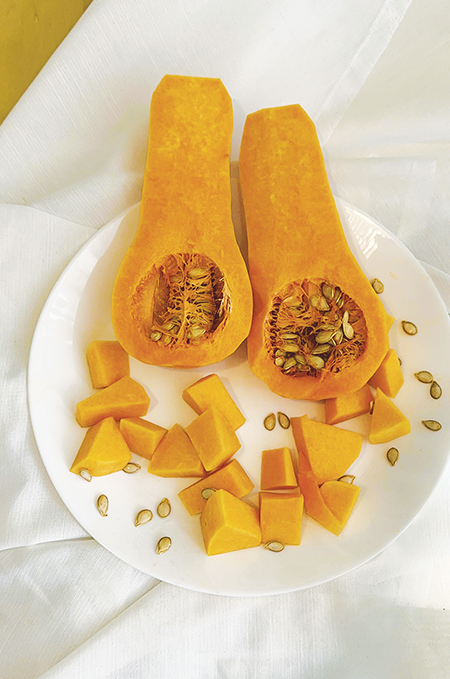
Spaghetti squash is oblong in shape with pale yellow skin. It is the least sweet in flavor, making it a good substitute for pasta. As its name suggests, once cooked, the flesh is scraped out with a fork into long thin strands that resemble spaghetti noodles. Butternut squash, on the other hand, has a pale peach color on the outside but yields a yellow-orange flesh on the inside. Its flavor is reminiscent of a buttered sweet potato, and it is the sweetest of the three winter squash varieties mentioned. Its sweet, creamy flesh makes butternut squash a versatile ingredient in many fall dishes.
Lesser-known varieties, such as delicata, Hubbard or carnival squash, may also show up at the farmers market. Ask the producer to describe their taste, preparation tips and best uses. No matter the variety of winter squash, their hard surface and sometimes odd shape can be frustrating to deal with. If you have a hard time cutting through the surface, try putting the squash in the microwave for a couple of minutes to soften it. If making a puree for butternut squash soup or “spaghetti noodles” with spaghetti squash, leave the skin on and place the whole washed squash directly in an oval-shaped slow cooker. No water is necessary. Simply put the lid on and cook on low or high until fork tender. Once cool enough to handle, use a knife to slice in half from stem to blossom end. Scoop out the seeds and use a spoon to scrape out the flesh. It’s never been so easy!
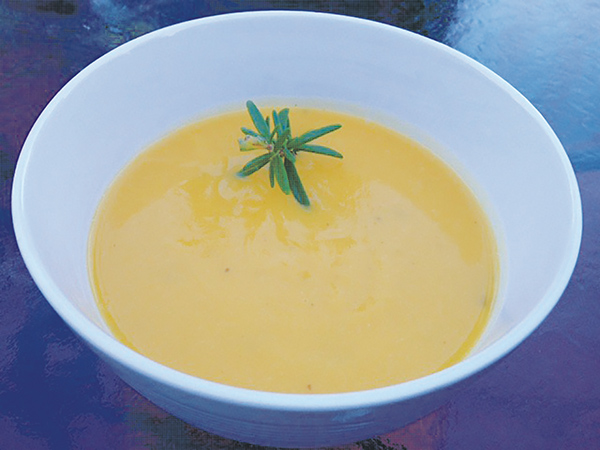
PEAR AND BUTTERNUT SQUASH SOUP
YIELD: 8-10 SERVINGS
2 Tbsp olive oil
1 onion, chopped*
1 medium butternut squash, peeled, seeded and cut into 1-inch
pieces* (see alternative preparation method)
3 medium pears, peeled and chopped into 1-inch pieces*
1 quart low-sodium chicken or vegetable stock
2 rosemary sprigs*
¼ tsp salt
¼ tsp black pepper
1 tsp sugar
½ cup evaporated skim milk
*Items may be available at local farmers markets.
In a large pot, heat olive oil over medium heat. Add onion and cook until softened. Add cubed squash and pears and cook for 5 minutes.
(Alternative preparation method: Place whole squash in a slow cooker, put on the lid and cook on low for 6-8 hours or on high for 4-5 hours. Use a knife to slice in half and scoop out seeds. Add cooked squash to the pan of cooked onion and pears.)
Pour in stock. Add rosemary sprigs, salt, pepper and sugar, and bring to a simmer. Cook until squash and pears are tender, about 45 minutes. Remove sprigs and add evaporated milk, stirring quickly so it doesn’t curdle. Pour into a blender or use an immersion blender and puree until smooth.
Nutrition facts (per serving): 110 calories, 1.5 grams fat, 240 milligrams sodium, 21 grams carbohydrates, 4 grams fiber, 4 grams protein.
Jenna Smith is a food and nutrition educator with University of Illinois Extension and board member of the Illinois Farmers Market Association (ILFMA). ILFMA supports local food and food systems by giving Illinois farmers markets and producers access to resources, education and connections to grow healthier and economically vibrant communities. For more information, visit ilfma.org.